Best Kitchen Cabinet Designs for Open-Plan Homes in North America
Best Kitchen Cabinet Designs for Open-Plan Homes in North America
Meta Description: Discover the top kitchen cabinet designs for open-plan homes in North America. From seamless integration to smart storage, learn how to create a stunning, functional heart of your home.
Introduction: The Open-Plan Kitchen as the Home's Command Center
In North America, the open-plan home has evolved from a trend into a defining architectural standard. Here, the kitchen is no longer a secluded workspace but the dynamic nucleus of family life, entertaining, and daily activity. This shift demands cabinetry that performs a dual role: providing exceptional functionality while serving as a central design anchor that harmonizes with living and dining areas. The right cabinet design can unify the space, define zones, and elevate the entire home's aesthetic. This guide explores the most successful cabinet designs for the modern North American open-plan layout.
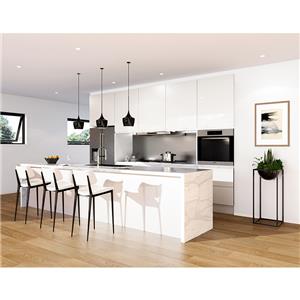
1. The Seamless, Monochromatic Design
This approach creates visual continuity and a sense of spaciousness by blurring the lines between the kitchen and adjacent areas.
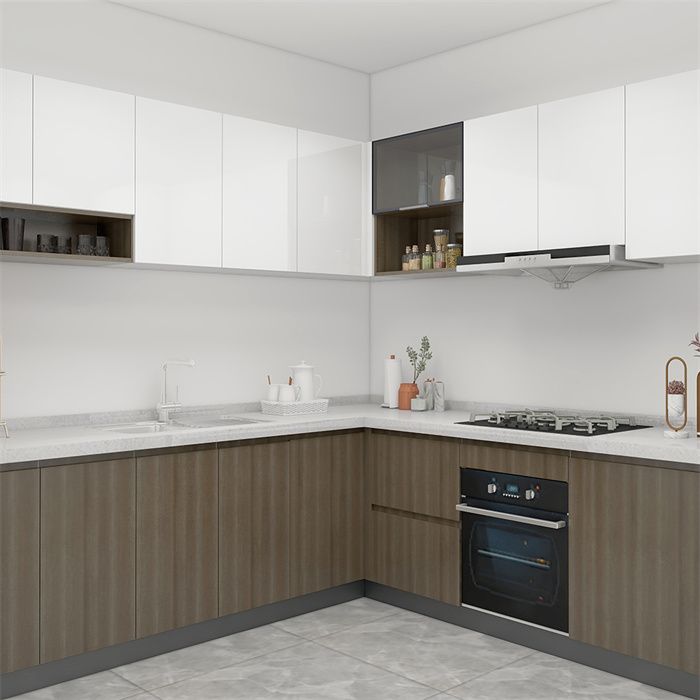
Core Concept: Extend cabinetry finishes, colors, and materials into the living space. A wall of cabinetry might incorporate the kitchen pantry, a media center, a bookshelf, and a dry bar, all using identical door fronts and hardware.
Best For: Modern, minimalist, and contemporary homes. It's ideal for creating a calm, uncluttered environment.
Key Features:
Slab Door Fronts: Flat-panel, handle-less (with integrated push-to-open mechanisms or channel pulls) cabinetry in matte finishes.
Consistent Color Palette: Shades of white, charcoal, black, or warm neutrals (greige, taupe) that flow from the kitchen to built-ins in the living area.
Material Flow: Using the same wood species or laminate on kitchen cabinets as on a feature wall or fireplace surround.
2. The Two-Tone & Zone-Defining Design
This strategy uses cabinetry to subtly define the kitchen "zone" within the larger open space without resorting to walls.
Core Concept: Employ a distinct, bolder cabinet color or material on the island or lower cabinets, while upper cabinets or perimeter cabinets blend with the wall color or living room millwork.
Best For: Transitional, farmhouse, and eclectic styles. It adds visual interest and depth.
Key Features:
Island as a Focal Point: A large island in a contrasting color (navy blue, forest green, charcoal, or natural wood tone) acts as a sculptural centerpiece.
Floating Shelves & Glass Fronts: Replacing some upper cabinets with open shelving or glass-front uppers lightens the visual weight and helps the kitchen feel less "heavy" and more integrated.
Furniture-Style Pieces: Using cabinetry that resembles freestanding furniture (e.g., a hutch-style pantry with legs) helps transition from the kitchen to the dining area.
3. The Warm, Textured Transitional Design
This design balances classic detail with clean lines, fostering a welcoming, timeless feel perfect for family-centric open plans.
Core Concept: Incorporate natural textures and warm wood tones to add organic comfort to the open space, preventing it from feeling cold or sterile.
Best For: Families and those seeking a balance of classic and modern. It's the quintessential "heart of the home" look.
Key Features:
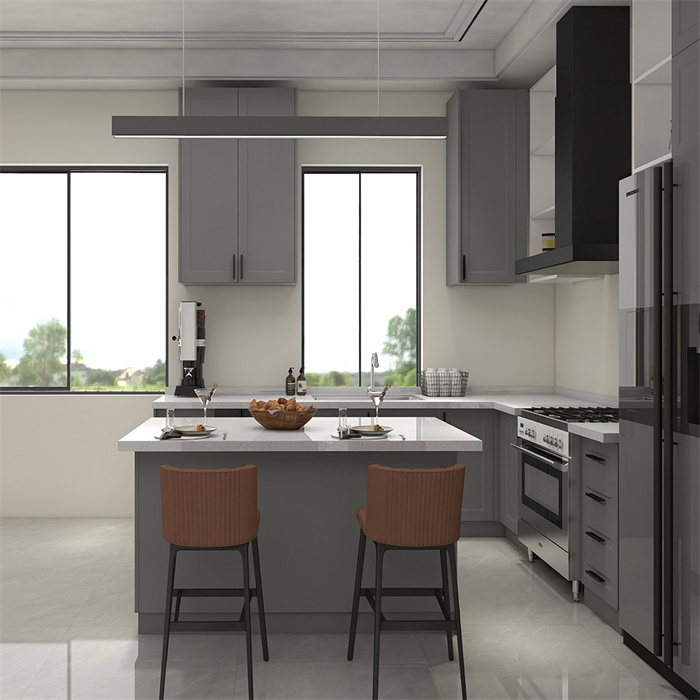
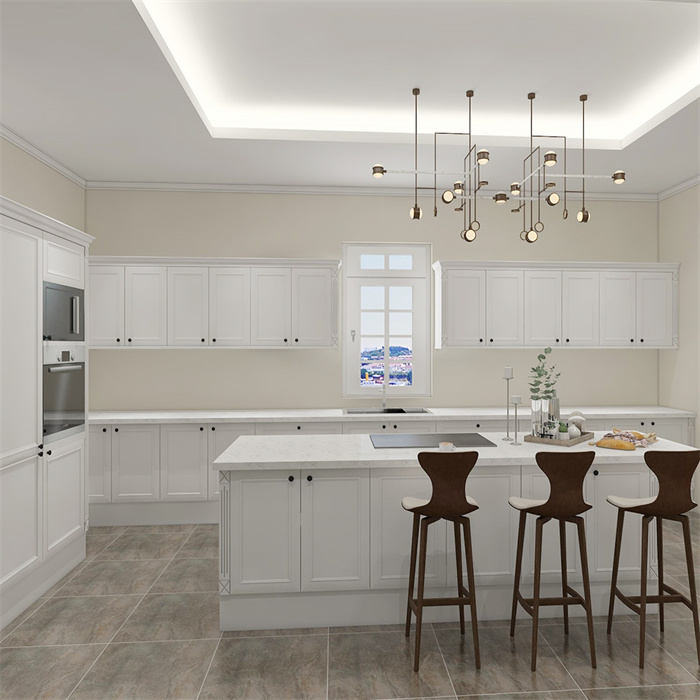
Shaker Style Dominance: The versatile Shaker door (a five-panel, recessed-center design) remains a top choice for its clean lines and ability to suit various finishes.
Mixed Materials: Combining painted perimeter cabinets with a stunning natural wood (oak, walnut, maple) island or range hood.
Open & Closed Storage: A intentional mix of closed cabinets for concealment and open shelving for displaying beautiful dishware or cookbooks adds personality.
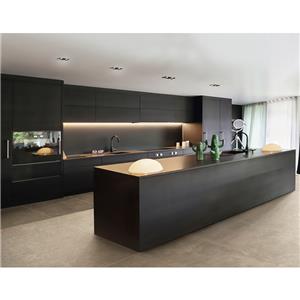
4. The High-Contrast & Bold Statement Design
For those wanting the kitchen to be a dramatic focal point, this design makes a powerful, confident statement.
Core Concept: Use deep, saturated cabinet colors or striking materials to create a "jewel box" effect that commands attention.
Best For: Lofts, modern homes with industrial elements, and bold homeowners.
Key Features:
Dark & Moody Hues: Black, deep blue, emerald green, or even plum on cabinetry, often paired with dramatic stone countertops and statement lighting.
Metallic & Industrial Accents: Incorporating flat black hardware, unlacquered brass pulls, or stainless steel open shelving.
Luxury Materials: High-gloss lacquers, exotic wood veneers, or textured laminates that catch the light and create visual dynamism.
5. The Smart & Integrated "Disappearing" Design
This forward-thinking design prioritizes ultra-clean lines and hidden functionality, perfect for a sleek, technology-forward home.
Core Concept: Cabinetry is designed to conceal appliances, sinks, and clutter, presenting a serene, uniform facade when not in use.
Best For: Ultra-modern homes, minimalists, and tech enthusiasts.
Key Features:
Appliance Garages & Panel-Ready Integration: Refrigerators, dishwashers, and even coffee systems are concealed behind cabinet panels that match the rest of the run.
Hidden Charging Stations & Pop-Up Vents: Electrical outlets and induction cooktop ventilation are integrated into countertops or cabinetry, popping up only when needed.
Floor-to-Ceiling Unified Units: Tall, seamless units that house everything from pantries to home office nooks, often featuring touch-latch openings.
Essential Considerations for Open-Plan Cabinetry
Regardless of style, these principles are non-negotiable:
Durability & Easy Maintenance: Surfaces will be on constant display. Opt for scratch-resistant laminates, durable paint finishes (e.g., catalyzed varnish), and materials that hide fingerprints.
Smart Storage Solutions: Clutter is the enemy of open-plan elegance. Prioritize deep drawers, pull-out pantries, dedicated recycling centers, and appliance garages to maintain a tidy aesthetic.
The Island as Multi-Functional Hub: Beyond storage, design the island for seating (with a comfortable overhang), prep work (with a secondary sink or cutting board integration), and socializing.
Lighting as an Extension of Design: Cabinetry should incorporate layered lighting: under-cabinet task lighting, in-cabinet accent lighting for glass fronts, and statement pendants over the island that complement the cabinet hardware and style.
Conclusion: Designing the Heart of Your Open Home
The best kitchen cabinet design for your North American open-plan home is one that reflects your lifestyle while mastering the art of visual cohesion and functional brilliance. It’s about choosing a style that transitions gracefully from your morning coffee to evening entertaining.
Start by assessing your home's architectural style and your personal needs. For timeless flow, consider the monochromatic or transitional approach. For defined character, explore two-tone or bold statements. For cutting-edge living, the integrated design is key. Work with a designer who understands open-plan dynamics to ensure your cabinetry doesn't just fill a kitchen but beautifully defines the home you live in.
Pro Tip for Homeowners: Always view full-sized door samples in your actual space at different times of day. In an open plan, how the cabinet color interacts with changing natural light and adjacent room colors is crucial to achieving the unified look you desire.
How to buy kitchen cabinets? ➡
Exclusive Interview with Homeowner ➡
Struggling to turn around in your kitchen? ➡
Is the trend towards "de-living-rooming" design catching on? ➡