Why Are Plywood Kitchen Cabinets More Durable for Australian Homes?
Why Plywood Kitchen Cabinets Are the Durable Choice for Australian Homes
Meta Description: Discover why plywood kitchen cabinets offer superior durability for Australian conditions. From humidity resistance to structural integrity, learn why this material outperforms alternatives in the Australian climate.
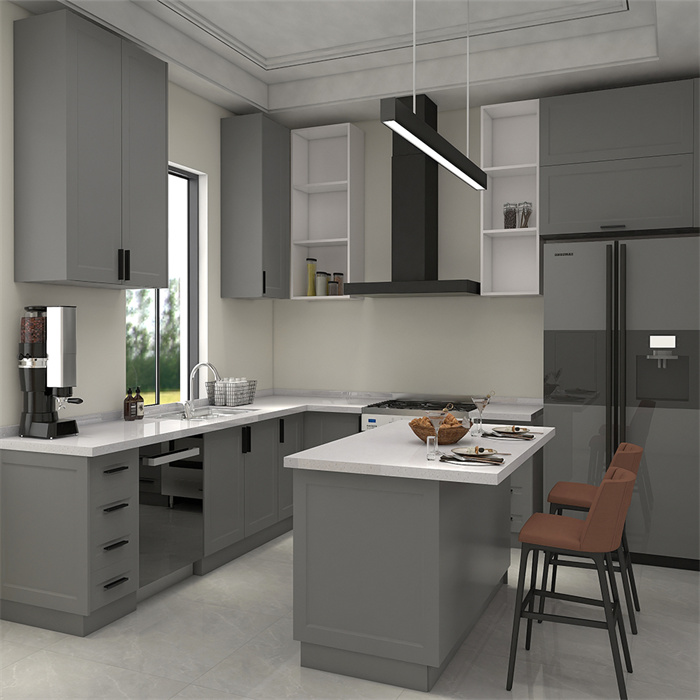
Introduction: The Australian Kitchen's Battle for Durability
In Australian homes, kitchen cabinets face a unique combination of challenges - from the humid coastal climates of Queensland and New South Wales to the dry heat of the Outback, and the significant temperature fluctuations experienced in southern states. Traditional materials often struggle to withstand these conditions, leading to warping, swelling, and premature deterioration. Plywood cabinets have emerged as a durable solution specifically suited to the Australian environment, offering a resilience that particleboard and MDF alternatives simply cannot match.
Part 1: The Structural Superiority of Plywood
Cross-Grain Construction: The Secret to Stability
Unlike particleboard or MDF which consist of wood particles or fibres pressed together in a single direction, plywood is constructed from multiple thin wood veneers (plies) glued together with their grains rotated up to 90 degrees relative to adjacent layers. This cross-grain configuration creates what engineers call dimensional stability - the material's resistance to expansion and contraction with moisture and temperature changes.
Australian Climate Application: This stability is crucial in Australia where kitchens can experience morning humidity levels of 80% in coastal areas dropping to 40% when air conditioning engages. Plywood cabinets maintain their shape and structure where particleboard would swell at the edges.
Exceptional Strength-to-Weight Ratio
The layered construction gives plywood remarkable strength. Australian standards (AS/NZS 2269) for plywood ensure that each sheet meets specific structural requirements.
Heavy Load Capacity: Plywood shelves can support 35-50% more weight than comparable thickness particleboard, crucial for storing Australia's heavy cast iron cookware, appliances, and pantry items.
Screw-Holding Power: The cross-grain structure allows screws to bite and hold more effectively, reducing the likelihood of hinge failure or sagging doors - a common issue in Australian kitchens after years of use.
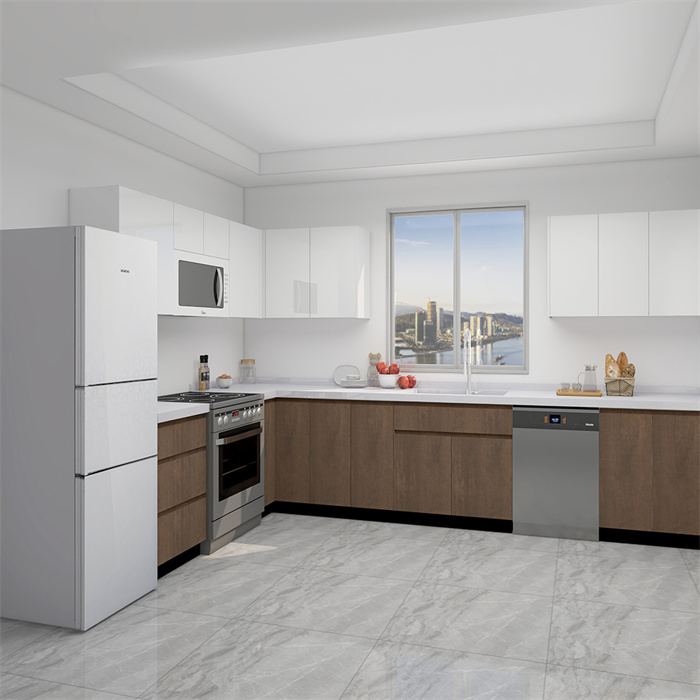
Part 2: Moisture Resistance for Australian Conditions
Natural Resistance vs. Added Treatments
While all wood-based materials are affected by moisture, plywood's construction provides inherent advantages:
Veneer vs. Particle Absorption: Water penetrates particleboard and MDF more rapidly and spreads through capillary action between particles. Plywood's solid veneers slow moisture penetration, and the cross-grain structure restricts dimensional change even when some moisture is absorbed.
Humidity Resilience: In humid coastal regions like the Gold Coast or Byron Bay, where humidity regularly exceeds 70%, plywood cabinets resist the swelling that causes doors to stick and drawers to jam.
Wet Area Performance: For kitchens with potential water exposure (near sinks, dishwashers, or in outdoor kitchens), marine-grade plywood offers exceptional protection. Made with waterproof phenolic glue and high-quality veneers, it's specifically engineered for wet conditions and exceeds Australian standards for moisture resistance.
Comparative Performance in Australian Climates
Coastal Regions: Plywood resists salt-air corrosion better than metal-edged particleboard, where metal components can corrode and stain materials.
Inland/Desert Regions: In dry climates, plywood is less prone to cracking and splitting than solid timber when humidity drops dramatically.
Variable Climates: In cities like Melbourne with significant daily temperature swings, plywood's stability prevents the joint failure common in less stable materials.
Part 3: Longevity and Sustainability - The Australian Context
Extended Lifespan in Australian Homes
Australian kitchens typically undergo renovation every 15-20 years. Plywood cabinets often last through multiple renovation cycles:
Renovation Flexibility: Unlike particleboard cabinets that frequently deteriorate at edges and screw points, plywood cabinets can be easily refaced, repainted, or reconfigured during renovations.
Damage Repair: Localised water damage to plywood can often be repaired, while particleboard typically requires complete panel replacement.
Housing Market Advantage: For Australian homeowners, plywood cabinets represent a quality feature that adds tangible value to properties, with real estate professionals frequently noting them as a premium feature in listings.
Environmental Considerations for Australia
Sustainable Sourcing: Many Australian manufacturers use plywood certified by the Forest Stewardship Council (FSC) or Programme for the Endorsement of Forest Certification (PEFC), ensuring sustainable forestry practices.
Lower Embodied Energy: Producing plywood requires less energy than manufacturing particleboard or MDF, which must break down wood completely before reconstituting it.
Australian Manufacturing: Supporting local plywood manufacturers reduces transportation emissions and supports the Australian forestry industry, with many mills in Tasmania, Victoria, and Western Australia producing world-class products.
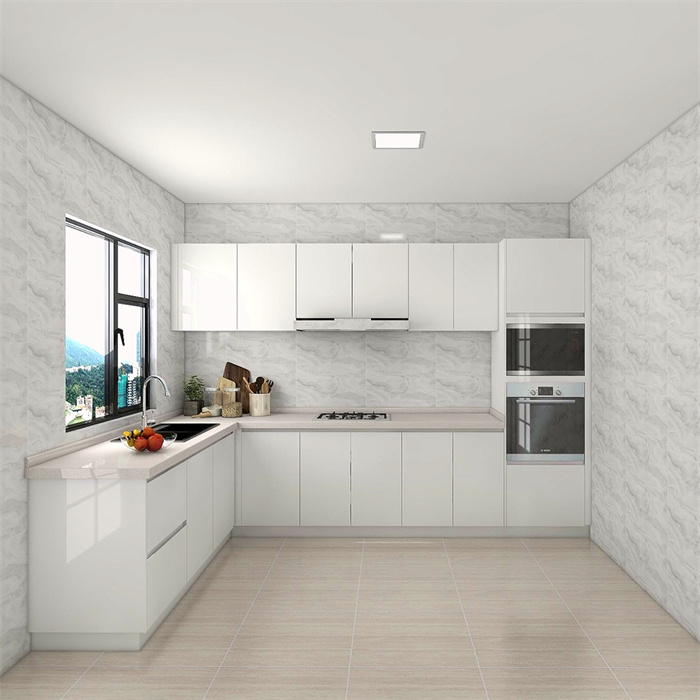
Part 4: Practical Benefits for Australian Kitchens
1. Installation and Maintenance Advantages
On-Site Modifications: Unlike pre-finished particleboard, plywood can be cut and modified on-site without special tools or exposing vulnerable particle edges.
Weight Considerations: While stronger, plywood is lighter than comparably sized solid timber, making installation easier and reducing stress on wall fixings.
Maintenance Simplicity: Small damages can be repaired with wood filler and refinishing, unlike particleboard which often requires complete panel replacement.
2. Design Flexibility
Edge Detailing: Plywood edges can be finished with veneer, solid timber, or left exposed for contemporary designs, offering more aesthetic options than particleboard's characteristic laminated edges.
Paint and Finish Adherence: Properly prepared plywood accepts paint and stains exceptionally well, with finishes adhering better than to laminated surfaces prone to chipping.
3. Health and Indoor Air Quality
Low VOC Emissions: High-quality plywood typically has lower formaldehyde emissions than particleboard or MDF, important in Australia's increasingly airtight, energy-efficient homes.
Mold Resistance: The dense surface of plywood provides fewer opportunities for mold growth compared to porous particleboard, particularly relevant in humid Australian regions.
Part 5: Cost Considerations: Value Over Time
While plywood cabinets typically command a 20-40% premium over particleboard alternatives in the Australian market, the long-term economics favor plywood:
Lifecycle Costing: When calculated over a 20-30 year period, plywood cabinets often prove more economical due to their extended lifespan and lower maintenance requirements.
Renovation Savings: The ability to reface rather than replace plywood cabinets can save $5,000-$15,000 in future kitchen renovations.
Insurance Benefits: Some Australian insurers view plywood cabinets more favorably for home insurance purposes, recognizing their greater resilience to water damage.
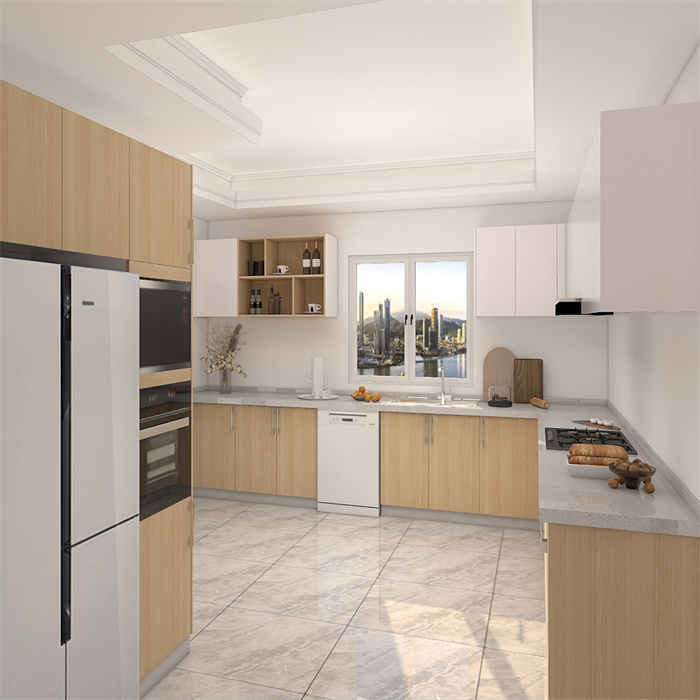
Part 6: Choosing Quality Plywood Cabinets in Australia
What to Look For:
Australian Standards Compliance: Ensure products meet AS/NZS 2269 standards
Plywood Grade: Look for A-Bond or Marine Grade for maximum moisture resistance
Core Quality: More veneers generally mean greater stability - 9-13 ply is ideal for cabinetry
Australian-Made: Locally manufactured plywood is typically better suited to Australian conditions
Questions to Ask Suppliers:
"What is the formaldehyde emission rating of this plywood?"
"Can you provide certification for moisture resistance?"
"How many veneer layers does this plywood contain?"
"Is this plywood suitable for coastal/humid/dry Australian conditions?"
Conclusion: The Wise Investment for Australian Homes
In the diverse and demanding Australian climate, plywood kitchen cabinets represent more than just a storage solution - they embody a strategic investment in durability, functionality, and long-term value. While the initial cost may be higher than particleboard alternatives, the extended lifespan, superior performance in Australian conditions, and reduced maintenance requirements make plywood the economically and practically superior choice.
For Australian homeowners building or renovating, specifying plywood cabinets ensures your kitchen will withstand the unique environmental challenges of the continent while maintaining its beauty and functionality for decades. In a country where the kitchen serves as the heart of the home and a centre for entertaining, the resilience and reliability of plywood cabinets provide peace of mind that your investment is protected against the tests of time and climate.
Final Recommendation: Consult with cabinetmakers experienced in working with plywood for Australian conditions. Their expertise in sealing, finishing, and installing plywood will ensure you maximize the material's inherent advantages, creating a kitchen that combines Australian resilience with timeless beauty.
How to buy kitchen cabinets? ➡
Exclusive Interview with Homeowner ➡
Struggling to turn around in your kitchen? ➡
Is the trend towards "de-living-rooming" design catching on? ➡